Male Infertility

Expert microsurgical and diagnostic evaluation focused on identifying treatable causes and optimizing reproductive potential. Fellowship-trained in andrology and male infertility, Dr. Deebel partners with reproductive endocrinology specialists across the Gulf Coast to help couples build their families.

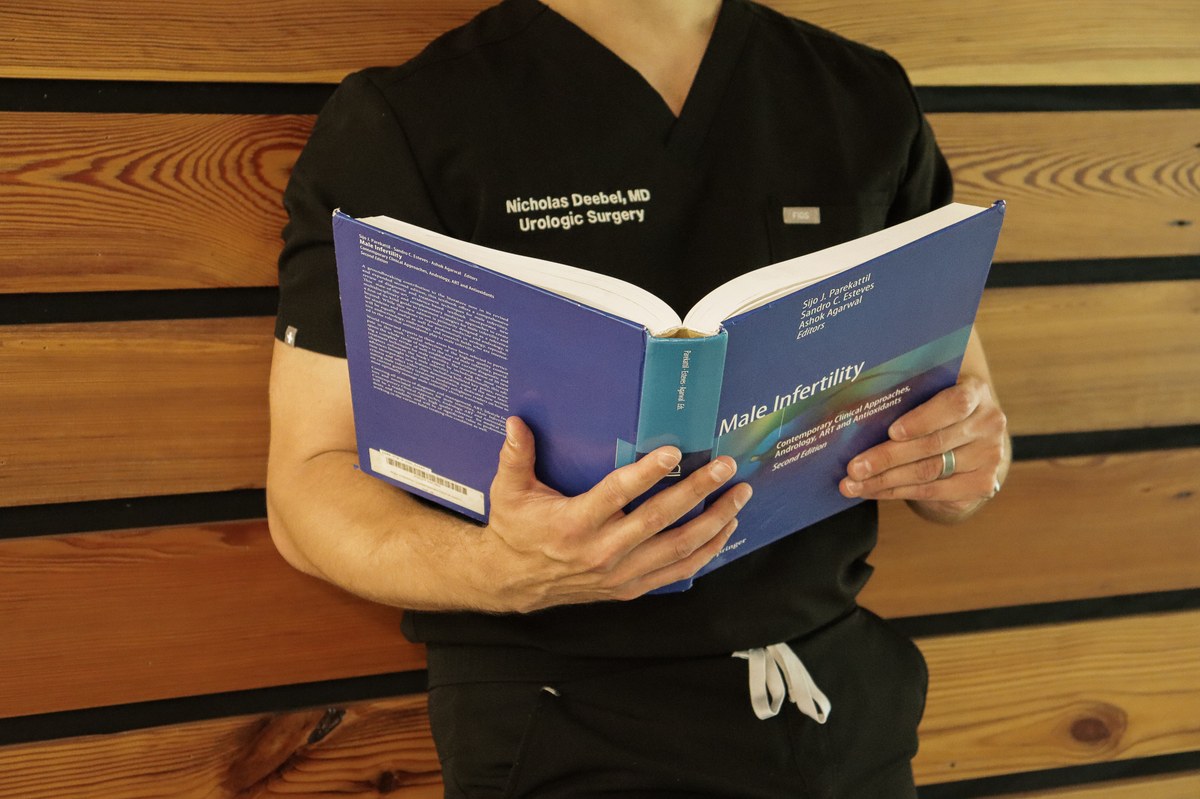
Dr. Nicholas Deebel holding the Male Infertility textbook

“Helping a couple hold the child they hoped for is the most meaningful part of what I do. My commitment is to give every couple honest answers, thoughtful options, and a genuine path toward the family they are working to build.”

— Nicholas Deebel, MD
Overview

Understanding male infertility

A male factor contributes to roughly half of all cases of couples who have difficulty conceiving, which is why evaluation of the male partner is an essential part of the work-up. The good news is that many causes are identifiable and treatable — and even when no sperm are found in the ejaculate, advanced microsurgical sperm retrieval can still make biological fatherhood possible. A thorough evaluation also matters for overall health, since infertility can occasionally be the first sign of an underlying hormonal or medical condition.

Common Contributors

What can affect male fertility

Varicocele

Enlarged veins in the scrotum that can impair sperm production and quality — one of the most common and correctable causes.

Learn More →

Hormonal & endocrine

Imbalances in testosterone and the pituitary hormones (FSH, LH) that regulate sperm production, including the effects of testosterone therapy.

Obstruction

Blockage of the reproductive tract, including prior vasectomy or congenital absence of the vas deferens.

Impaired production

Nonobstructive azoospermia and other conditions where the testicle produces little or no sperm.

Genetic

Chromosomal and genetic factors that affect sperm production and may inform treatment and family planning.

Lifestyle & gonadotoxins

Heat, certain medications, anabolic steroids, tobacco, marijuana, and prior chemotherapy or radiation.

Evaluation

How male fertility is assessed

History & physical exam

A confidential review of medical, surgical, and reproductive history with a focused exam, including assessment for a varicocele.

Semen analysis

The cornerstone of the evaluation, measuring sperm count, motility, and morphology — often repeated for accuracy.

Hormonal blood work

Testosterone, FSH, LH, and related hormones to understand how the testicles and pituitary are functioning.

Genetic testing when indicated

Karyotype, Y-chromosome microdeletion, and CFTR testing in cases of very low or absent sperm.

Scrotal ultrasound

Imaging to characterize a varicocele, obstruction, or testicular abnormalities when needed.

Treatment Options

Personalized paths to fatherhood

Treatment is matched to the underlying cause — from medical optimization to advanced reproductive microsurgery.

Medical & lifestyle optimization

Addressing reversible factors — medications, heat exposure, weight, and overall health — to improve sperm production naturally.

Fertility-sparing hormone therapy

Medications such as clomiphene or hCG that can raise testosterone and support sperm production. Standard testosterone therapy suppresses fertility, so fertility-sparing protocols are used for men who wish to conceive.

Microsurgical varicocelectomy

A precise, microscope-assisted repair of scrotal varicoceles that can improve sperm quality and natural conception rates.

Learn more →

Microsurgical sperm retrieval (micro-TESE)

For men with azoospermia (no sperm found in the ejaculate), microdissection testicular sperm extraction and related techniques (TESE, MESA/PESA) can recover sperm for use with IVF/ICSI.

Vasectomy reversal

For obstruction after vasectomy, microsurgical reconstruction can restore sperm to the ejaculate. Learn about vasectomy reversal →

Fertility preservation & cryopreservation

Sperm banking and surgical sperm retrieval before cancer treatment, coordinated with the USA Mitchell Cancer Institute and reproductive specialists. If you have been diagnosed with cancer and wish to preserve your fertility prior to therapy, schedule a consultation with Dr. Deebel to urgently start this process. We will work with you and your oncologist to preserve your fertility without delaying your cancer treatment.

A coordinated, couple-centered approach

Dr. Deebel works closely with reproductive endocrinology and infertility (REI) specialists across the Gulf Coast to align the male evaluation with the couple's overall plan, including natural conception, intrauterine insemination (IUI), or in vitro fertilization (IVF/ICSI).

FAQ

Frequently asked questions

Evaluation is recommended after 12 months of trying to conceive, or after 6 months if the female partner is over 35. Both partners should be evaluated, and the male evaluation is straightforward to begin. Additionally, male patients may wish to undergo preconception testing to prepare for future efforts at natural conception. This allows men to understand their baseline fertility potential.

It is the cornerstone, but not the complete picture. A thorough work-up also includes history, physical exam, hormonal testing, and — when indicated — genetic testing and ultrasound to find treatable causes. Men with untreated low testosterone may also be at risk for other medical conditions, and treatment may positively impact overall health as well.

Often, yes. Depending on the cause, microsurgical sperm retrieval such as micro-TESE, or reconstruction for obstruction, can recover sperm for use with IVF/ICSI. A focused evaluation determines the best approach. Dr. Deebel will work with each couple during their consultation to explore options and define expectations.

Yes. Most men with cystic fibrosis have congenital bilateral absence of the vas deferens (CBAVD), which blocks sperm from reaching the ejaculate even though the testicles usually produce sperm normally. In these cases, sperm can typically be recovered directly from the testicle or epididymal remnant (often smaller than normal), for example with TESE or MESA, and used with IVF/ICSI to father a biological child. Because CFTR mutations can be passed on, genetic counseling and CFTR testing of the female partner are recommended as part of family planning.

Yes. Standard testosterone therapy suppresses the body's own sperm production and can cause infertility. Dr. Deebel uses fertility-sparing protocols to support testosterone and sperm production for men who wish to conceive.

Yes. Microsurgical varicocelectomy is a precise repair that can improve sperm quality and the chance of natural conception in appropriate candidates. Another option is angioembolization, performed by an interventional radiologist, though data on how much it improves fertility are limited.

Yes. An initial telemedicine visit is a convenient way to review your history and any prior testing and to begin a plan before in-person evaluation.

Expecting couple sharing a tender moment
Research

Male Infertility Publications

Recent peer-reviewed work by Dr. Deebel and colleagues on male infertility and reproductive medicine. Searching for solutions to clinical questions with limited answers.

Partners in Care

Reproductive endocrinology & infertility practices we collaborate with:

Building a family is a team effort. Dr. Deebel partners closely with reproductive endocrinology and infertility (REI) specialists across the Gulf Coast to coordinate seamless, comprehensive care for couples.

NewLIFE Fertility

NewLIFE Fertility

Pensacola: (850) 857-3733 Mobile: (251) 217-2020
The Center for Reproductive Medicine

The Center for Reproductive Medicine

(251) 438-4200
Elite IVF

Elite IVF

(251) 680-2441
University of Mississippi Reproductive Endocrinology and Infertility

University of Mississippi Reproductive Endocrinology and Infertility

(601) 984-5330
PositiveSteps Fertility

PositiveSteps Fertility

(601) 514-6615
Mississippi Reproductive Medicine

Mississippi Reproductive Medicine

(601) 936-3650

Ready to start your evaluation?

Schedule a consultation to understand your options for building your family. In-person and telemedicine visits are available.